The WorkBoat Conference Program delivers a wide range of educational sessions covering key topics across the maritime industry.
Curated by the WorkBoat content team in collaboration with the editorial team from WorkBoat, the program highlights the latest industry trends, challenges, opportunities, and current events.
Shipbuilding & Repair sessions will highlight technology innovations and new approaches to vessel construction and maintenance, design, compliance, and workforce.
Shipbuilding & Repair Classroom Sessions Sponsored by:
Government & Military sessions will provide insights into military and government priorities, projects, and requirements for the maritime industry.
Passenger Vessel & Ferry sessions will put a spotlight on recent changes to vessel design, operations, and workforce.
Passenger Vessels & Ferries Classroom Sessions Sponsored by:
Tug, Towboat & Barge sessions will showcase new industry approaches to propulsion selection and crew culture, innovative technologies for navigating inland waterways, and investment market insights.

Use the session filter tool below to search by location:
WorkBoat Main Stage
WorkBoat Special Events
Groundbreakers Stage
WorkBoat Classroom 1 (Room R02): Shipbuilding & Repair + Government & Military
WorkBoat Classroom 2 (Room R03): Passenger Vessels, Ferries + Tugs, Towboats, Barges
The future of the U.S. inland waterway system requires investing in both physical infrastructure and adopting new technologies.
Lock modernization and channel expansion are critical, yet they can't fix the coordination gaps that slow operations. And AI-driven tools are only as good as the structured data feeding them, which the industry has historically lacked. Neither approach alone can address the full challenge.
This session examines why physical and digital systems must advance together, where inefficiencies are occurring, and what a connected waterway network looks like in practice.
Attendees will:


New York Harbor is going electric. This session offers a close look at the coordinated, public-private effort now underway to electrify the harbor’s diverse working fleet and supporting infrastructure.
Discussion will focus on vessel electrification strategies, energy storage technologies, shore-side charging, grid interface planning, and operational analyses, with a particular emphasis on developing right-sized solutions for vessels and future-proof infrastructure. Speakers will emphasize how near-term decisions can preserve flexibility, reduce implementation risk, and ensure compatibility with future technologies.
Attendees will:


As of July 2025, every vessel, port facility, and offshore operation in U.S. waters must have a cybersecurity program under the Coast Guard's new Final Rule — and most commercial operators aren't ready.
This session cuts through complicated jargon to provide a practical guide for working maritime operations. Drawing on hard-won lessons from naval cybersecurity, speakers will give commercial operators a clear, practical path to compliance without blowing their budgets or timelines.
Attendees will:


America’s Maritime Action Plan, the Coast Guard’s icebreaker programs, and sustained Navy demand have put more government work in front of U.S. shipyards than at any point in decades. For commercial builders, the opportunity is real — but so are the constraints. The workforce is already stretched, and project timelines leave no room for rework asking the question, ‘how to deliver without breaking the yard.’
This session brings together shipbuilders, Navy leadership, and expert systems integrator to look at what actually moves a hull out of the dock faster. The panel will address the need for innovation, systems modernization and the necessary integration work for Command, Control, Communications, Computers, and Cyber systems (C5I) behind every vessel. The panel will address resource and schedule risk, advanced concepts, where integration tends to go wrong and what a shipyard needs in place before the first module arrives. The conversation will also look at new technologies helping to speed build time and reduce bottlenecks, such as robotic welding, hull inspection crawlers, remote tank inspection, and more. For builders, operators, and repair yards across commercial maritime, the point is practical: the partnerships and tools that make a gray hull deliverable on schedule are largely the ones that make any vessel program more predictable.
A vessel has run aground on the Lower Mississippi, miles south of New Orleans. Night is falling, a second tow is bearing down in the channel, and calls are coming in from the Coast Guard, the owner, and the underwriter. What do you do, and in what order?
This session doesn't answer that question for you, it puts you in the room where the answer gets made. Working through a realistic Mississippi River grounding scenario in real time, attendees in this participatory session will grapple with the decisions that salvage masters, tug captains, marine surveyors, and response coordinators face in the field.
The session unfolds in structured phases, with complications introduced as the situation evolves — a suspected hull breach, environmental reporting obligations, a second vessel becoming a navigation hazard. Small groups work through each escalation with experienced practitioners before coming back together for a debrief grounded in three foundational principles: safety of life, environmental protection, and salving the vessel.
Attendees will:

The electric transition in maritime isn't just about cutting carbon; it's also about cutting costs. With more than 1,000 electric vessels on the water today, the world is wondering: can we go green without paying a premium?
Fleetzero will answer that question in this session, utilizing real-world examples to show how operators can pursue battery-powered propulsion while saving money, with or without government subsidies. Paired alongside the global debut of the longest-range hybrid electric support vessel in the world, this session will prove that the future is electric – and it’s attainable.
Attendees will:

The Women in Maritime Summit is designed for maritime professionals at every stage of their careers to learn, collaborate with peers, and leave with professional connections that last beyond the day.
This year’s summit will open with a presentation on a new international workforce development initiative led by the Massachusetts Maritime Academy. The Summit will then shift to an interactive discussion on how advanced technologies are changing the way maritime professionals work. Attendees will be invited to participate in a brief roundtable discussion, before a panel of industry leaders takes the stage for an expert-level conversation on the topic.
See the description below for more information, or click here for the full program.
* Upgrade Required to Attend * Add this session during Registration.
A New Toolkit: Technologies Reshaping Maritime Careers & Operations
The maritime industry is undergoing one of the most significant technological transformations in its history, and the professionals navigating that shift are redefining what it means to work in this field. This panel brings together leaders from across the maritime sector to explore how advanced and emerging technologies are changing daily work, accelerating career development, and opening new pathways for the next generation of maritime professionals — in roles ranging from vessel operations and engineering to design, business development, and beyond.
The conversation will move across a range of technologies reshaping the industry today, such as simulation training, artificial intelligence, digital twins, augmented and mixed reality, and predictive maintenance and more. Together, these tools are changing how professionals build skills, make decisions, design vessels, and manage operations — and they are removing geographic and physical barriers to professional development in ways that are creating a more accessible and level playing field for the next generation entering the field.
Panelists to be announced soon!


As ship designs grow more complex and dry dock schedules tighten, the physical work of docking and handling vessels is becoming one of the most consequential — and least discussed — frontiers for automation. This panel examines the mechanical systems, control systems, and real-time data driving a new discipline: autonomy in dry docking.
Panelists will share field-tested approaches to automating docking evolutions, managing dry dock loads, and integrating naval architecture with intelligent control systems. They will also discuss how these capabilities can scale across shipyards of every size to meet the readiness demands of the future U.S. fleet.
Attendees will learn:


Most maritime operators are still running their fleets the way they always have: crew credentials tracked in spreadsheets, maintenance logs in binders, and training records scattered across email chains. It worked until it didn't. Vessels got held up because a credential lapsed and nobody caught it. Shoreside staff spent their days re-entering data instead of supporting the fleet. New hires showed up without the right endorsements because no one had a clear picture of what training they needed.
This panel puts those operators on stage to talk about what changed when they made the switch to modern tools for fleet management. They'll speak directly to what the transition looked like from the inside, what was easier than expected, what took longer, and what the ROI looked like once the dust settled.
Attendees will:


Included in America's maritime workforce shortage is a shrinking pool of design and engineering talent that makes timely, affordable naval construction possible. An aging workforce, irregular design workloads, and a thin bench of early- and mid-career naval architects have created a dangerous gap between shipbuilding ambition and executable capability. The competitive landscape has shifted, too. Foreign design entities, backed by national investment in digital engineering and model-based systems, are gaining ground.
This session will examine the need for Congress to approve a dedicated $50 million naval architecture and ship design workforce development program, and the importance of sovereign naval vessel design capabilities to the nation's security and the Navy's long-range shipbuilding plans. It will also spotlight existing workforce development activities aimed at addressing this ongoing challenge.
Attendees will:


Diversification has quietly become one of the most important words in port planning. Port owners and operators across the nation, both inland and coastal, are making major investment decisions about how to serve both the markets of today, and those of the future. The terminals positioning themselves to thrive in the long-term are building the flexibility to serve several markets at once, so they can adapt as demand moves rather than being tied to any one source.
This panel brings together port leaders and the agencies backing them to look at diversification as a long-term strategy. Speakers will share how they’re planning, financing, and building multi-use waterfronts that support many uses, including a mix of traditional and renewable energy, vessel construction and repair, commercial cargo, and defense applications. The conversation will address practical realities such as how to underwrite infrastructure that must serve more than one tenant, how commercial ports plug into national defense readiness, where public investment is flowing and why, and how port operators are making capital decisions under real uncertainty.
Attendees will:


Nuclear propulsion for commercial vessels is back in serious conversation, and momentum is building on both sides of the Atlantic. This session offers an international update on small modular reactors (SMRs) and nuclear propulsion for offshore vessels, with perspectives from the Netherlands and the United States on both engineering and regulatory considerations.
From the Netherlands, speakers will present Nuclear Drive, a public-private flagship initiative of the Dutch maritime sector. The program explores the feasibility of nuclear propulsion and onboard power generation for large offshore vessels, with a specific focus on practical engineering boundaries, safety-by-design principles, and realistic use cases. A representative from one of the program's industry partners will share firsthand how the work is progressing.
From the U.S., the American Bureau of Shipping (ABS) will discuss its work advancing the technical frameworks, classification requirements, and vessel integration concepts needed to bring nuclear to sea. ABS also leads nuclear efforts for the U.S. Center for Maritime Innovation, bringing together shipowners, shipyards, SMR developers, and government stakeholders to chart pathways to adoption.
This conversation will focus on practical engineering boundaries, with speakers discussing where nuclear propulsion could make sense, how modern SMR concepts differ from historic nuclear systems, and what the next steps to deployment look like.
Attendees will:


Commercial maritime operators are navigating a growing set of obligations around sexual harassment prevention and workplace conduct under the Safer Seas Act, while simultaneously managing a generational workforce shift that is raising the bar for crew culture and retention. This session examines how those two realities intersect, and why the quality of the onboard environment is not just a compliance or HR issue but a direct operational safety concern.
Through real-world examples and implementation insights, a panel of HR professionals, mariners, training specialists, and regulatory representatives will explore how policy, leadership behavior, and crew dynamics combine to either reinforce a respectful, high-performing crew environment — or compound the risks that come when they don't. The session addresses Sexual Assault and Sexual Harassment (SASH) compliance under the Safer Seas Act, the realities of small crew structures, 24/7 co-habitation, and the unique reporting challenges of vessel operations with a focus on what operators can actually do to reduce exposure, improve retention, and strengthen performance.
Attendees will:


This session gives workboat owners, operators, and shipyards a practical look at how modern corrosion prevention and coating performance strategies are changing what's possible for fleet reliability and asset longevity. Organized by the Association for Materials Protection and Performance (AMPP), the panel will draw on real-world case studies and field experience across commercial, industrial, and government fleets, with perspectives from industry experts and coatings manufacturers and corrosion specialists.
The conversation will address how to evaluate risk, select the right protection methods, and integrate corrosion management into broader vessel lifecycle planning — moving from a reactive task to a proactive, value-driven strategy.
Attendees will:


Wind-assisted propulsion systems (WAPS) are gaining momentum as a means of reducing fuel consumption and emissions, but their effectiveness depends strongly on the vessel, technology, operating profile, and wind conditions. For short-sea and service vessels, the opportunities and constraints can differ significantly from those experienced by larger oceangoing ships. The risk picture is complicated and must be assessed for each specific ship, but which risks may increase, and which may diminish depending on vessel size and operational profile?
This presentation examines what changes when WAPS is applied to smaller vessels and shorter routes. It will discuss factors such as wind availability, operating speed and time at sea, routing, deck availability, air-draft constraints, cargo handling, and the aerodynamic and hydrodynamic interactions that influence actual WAPS performance.
Selected vessel examples operating around the U.S. will illustrate how wind-assistance potential can vary considerably between vessels and operating profiles. Drawing on DNV’s experience, the presentation will discuss performance prediction, including vessel and WAPS interactions, energy optimization, as well as ongoing developments in design and performance verification.
The objective is to provide owners and operators with a practical framework for understanding where WAPS makes sense, what drives the business case, and what should be assessed before investment. Understanding the use case is necessary, and an acceptable ROI is a prerequisite to facilitate a reasonable uptake of the technology in short sea shipping.
The presentation will also introduce DNV’s WAPS and WAPS-ready class notations and discuss how vessels can be designed or prepared for future WAPS integration.

When the White House first issued a temporary waiver of the Jones Act in March, the U.S. maritime industry was quick to respond, raising concerns about the threat it poses to American shipbuilding, mariners, and national security. Now, with a third waiver extension issued in August, questions about its consequences and long-term impact are getting louder.
This session gives operators, shipbuilders, mariners, and industry leaders a direct forum to share their concerns, experiences, and perspectives on what the waiver is doing — and what continued erosion of Jones Act protections could mean for the domestic maritime industrial base.


Each year, WorkBoat editors review the new vessels delivered to the North American workboat fleet and choose 10 that stand out for their design, construction, innovation, or the role they play in their trade. The 10 vessels are honored during the Significant Boat Awards Happy Hour where a winner will be announced.
Grab a drink, meet the builders and owners behind these boats, and be there for the reveal. Whether your favorite takes home the title or not, this is your chance to celebrate the vessels setting the bar for what’s next in the industry.
Join us at the Main Stage to celebrate! To see the Top 10 boats, click here.
Sponsored by Travelers
The American maritime sector is facing a moment of great opportunity. Federal engagement and investment are growing, industry excitement is renewed, and with new work coming down the pipeline, there's great potential for companies across the ecosystem to reap the rewards.
Beginning with keynote remarks from Stephen M. Carmel, Administrator of the Maritime Administration (MARAD), this session will focus on the pathways and next steps for the U.S. to realize this once-in-a-generation opportunity to revitalize its maritime industrial base, expand shipbuilding capacity, fortify defense capabilities, and regain global competitiveness.
Following the keynote, a panel of speakers will then discuss the new initiatives coming out of the Maritime Action Plan and what it means for businesses, explore how shipyards, manufacturers, and the broader supplier base will need to shift to keep up with the growth of new projects, and offer recommendations for companies looking to move into the defense sector.
* Upgrade Required to Attend * Add this session during Registration.


As the maritime industry looks toward the new year, the U.S. Coast Guard is undergoing some of the most significant changes in its recent history, with direct implications for mariners, vessel operators, and the businesses that depend on America’s waterways.
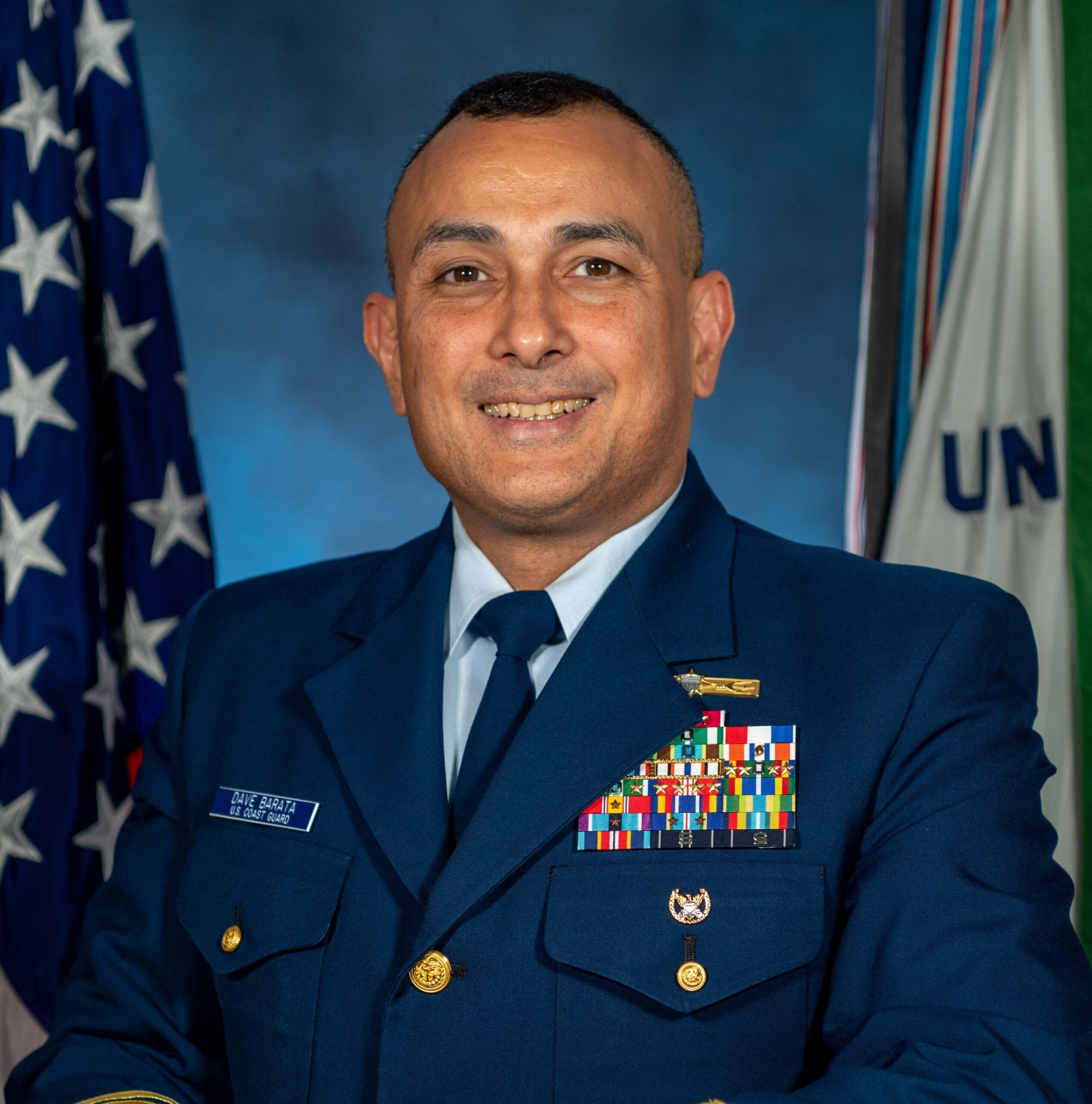
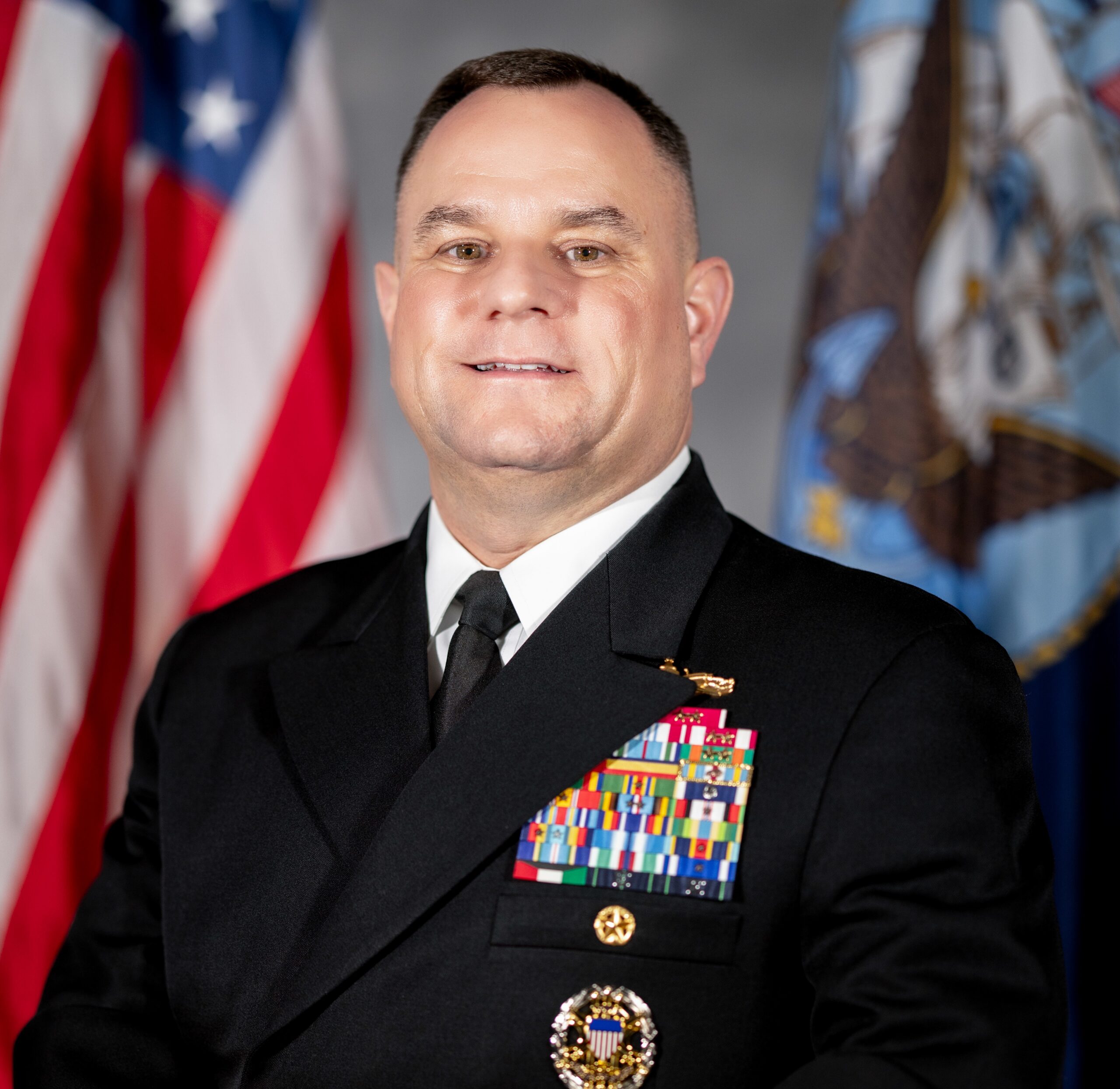
In this fireside chat, Rear Admiral David Barata, Deputy Commandant for Operations Policy and Capabilities, offers a rare look at where the service is headed and why. Drawing on his recent command of the Heartland District, which oversaw the Coast Guard’s operations across the Gulf Coast and the Mississippi, Ohio, and connected river systems, he brings a firsthand understanding of the pressures facing working waterfronts today.
Attendees will leave with insight into the Coast Guard’s priorities for 2027 and beyond, how its policies are evolving to meet a changing industry, and what that means for planning their own year ahead.


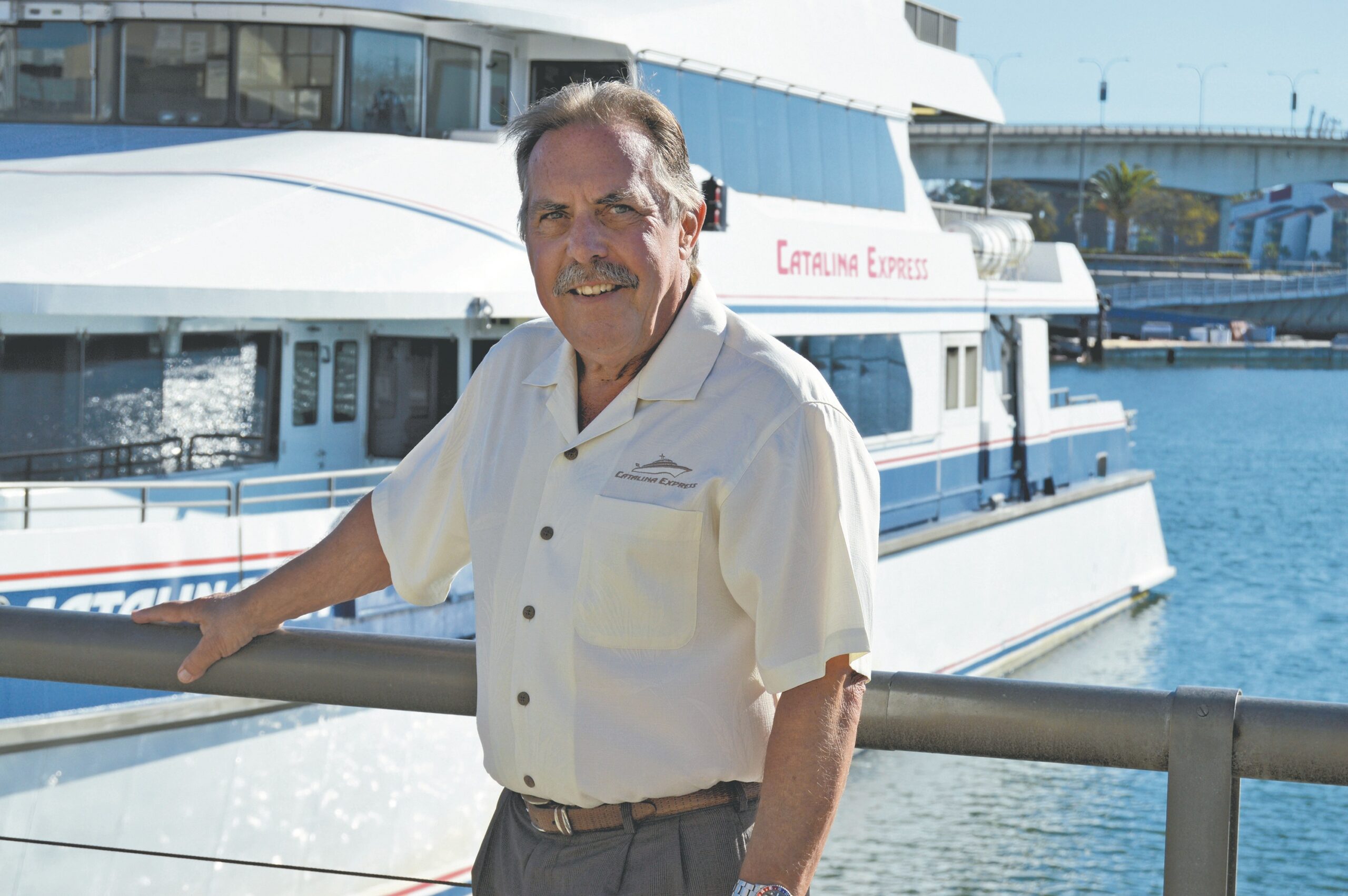
California has set new emissions requirements for commercial craft operating in state waters — and the ferry now under construction for Catalina Express is one of the first direct responses to them. The 524-passenger, low-emissions catamaran being built by Marine Group Boat Works was made possible through backing from the Port of Los Angeles and the California Air Resources Board, and represents a real-world demonstration of what compliant, next-generation ferry design looks like. This session brings together the shipbuilder and operator to walk through how the vessel came together and what it takes to absorb the Tier 4 requirements while delivering a high-performance ferry.
The conversation will cover the technical and programmatic realities of building to a new regulatory standard — from propulsion choices and emissions systems to design tradeoffs and the role of public funding in making the project viable.
Attendees will:


Most electric vs. diesel cost comparisons measure the price of retrofitting new technology into an old design. This session starts from a different premise: what happens when a vessel is built around distributed electrical architecture from the beginning? When done correctly, this approach produces a vessel that is cheaper to construct and operate than its diesel equivalent.
To prove this finding, speakers will present validated build cost comparisons across four configurations of a 100-ton harbor assist tug: Tier 4 diesel, parallel hybrid, series hybrid, and fully electric. Learn what distributed architecture removes from a vessel, what it adds, and how it changes what's possible at the design phase.
Attendees will:


Offshore lifting and handling systems are evolving fast — driven by deeper waters, complex projects, and the growing role of remote and autonomous technologies.
The industry is moving toward modular, containerized equipment and embracing electrification, automation, and digital controls across cranes, winches, launch-and-recovery systems, and cable and pipe lay equipment. In this session, a panel of industry stakeholders will explore these changes and discuss how to support the next evolution of this offshore sector.
Attendees will:


In 1847, American naval officer Matthew Maury published a chart of the North Atlantic built from old ships’ logs and gave it away free to any captain who agreed to send his own logs back. As a result, the run from New York to Rio fell from 55 days to 40, and within six years ten nations had adopted his system. It survives today as the Voluntary Observing Ship scheme but has shrunk to about two thousand vessels on a handful of routes with the emergence of satellites and buoys. However, those systems only report the weather. They can tell you what a stretch of what is usually like at a certain time, but not what's out there right now.
That gap has a cost every operator knows: sea state taken on faith, a port you can’t assess until you’re in it, no picture of what’s around the vessel beyond radar and whoever has the watch, and, when something goes wrong, nothing but a logbook entry and someone’s word. Quartermaster CEO Neil Sobin will make the case for a new approach: Sensors on the working boats already out there, sharing what they see in real time.
In this session, Sobin will share what the network has learned so far, where the gaps remain, and what changes when it grows from hundreds of vessels to thousands, creating an ocean that works like a stock exchange instead of a pawn shop. Maury’s idea was simple: you give us what you see, and we give you something worth having. Sobin will argue it’s time to make that trade again.


U.S. shipyards are entering a new investment cycle, and the inland market is at the center of it. Stricter enforcement of Subchapter M has exposed a critical shortage of drydock capacity precisely as demand is rising — and as a significant share of the inland barge and towboat fleet approach inspection deadlines. At the same time, federal defense spending and policy initiatives like the SHIPS Act are directing capital toward larger yards, creating a cascading effect that positions small and midsize inland yards as increasingly attractive targets for private equity and infrastructure investors.
This session examines the forces driving renewed investor interest in shipyards, what that capital influx means for operators and owners navigating growth or ownership decisions, and where the most compelling opportunities and risks are emerging across the inland and coastal markets. The discussion will draw on recent deal activity, including high-profile acquisitions in the inland barge and shipyard sectors, to ground the conversation in current market realities.
Attendees will:

Washington State Ferries (WSF) is in the middle of one of the most ambitious electrification programs in the country. Over the past year, WSF successfully converted the largest hybrid-electric passenger vessel in the U.S., finalized design on two new hybrid-electric ferries now entering construction, and is preparing to issue an RFP for its first terminal electrification in Seattle, among other accomplishments.
WSF is no longer exploring what electric ferry operations could look like — it is building them.
This session brings together key program partners to report on progress, share lessons learned, and look ahead at the work still to come. The discussion will cover the technical and programmatic realities of moving from a single vessel conversion to fleet-wide implementation, including how to adapt proven technology to the unique demands of Puget Sound, and how to engineer power infrastructure, onboard propulsion, energy storage, and vessel systems as a coordinated whole.
Attendees will:


Collaborative robots (CoBots) are making their way onto shipyard floors, and this session offers a deep dive into what that looks like in practice. A panel of industry leaders will discuss what it realistically takes to implement CoBots, how to navigate weld procedure qualifications, and how shipyards can access government-subsidized training resources.
Speakers will share findings from a two-year implementation project, funded by the National Shipbuilding Research Program (NSRP) and led by the Shipbuilding CoBot Alliance. Framed through a welder's perspective of what the technology delivers in a shipbuilding and repair environment, this session will cover the benefits, challenges, and the path forward from concept to qualified weld procedure.
Attendees will:


Robotics, automation, and other next-generation tools are unlocking new ways to build autonomous and unmanned vessels — but there's no playbook yet. Shipyards are actively learning how to build these vessels quickly, at scale, with new tooling and a retrained workforce.
This panel brings together the builders, shipyard operators, and technology providers doing that work to talk about what it actually takes: financing and planning major infrastructure investments, installing new tooling on the shop floor, and preparing people to run it.
As demand grows for autonomous and unmanned vessels built faster and at greater scale, speakers will share a boots-on-the-ground view of standing up these capabilities inside new and existing yards — and what it really means to build the fleet of the future.


The infrastructure required to bunker hydrogen at scale has kept it out of reach for most commercial marine operators — but onboard generation is changing that calculus. Methanol-to-hydrogen reforming offers a new path by generating hydrogen on demand using a fuel already widely transported and handled across global marine and inland waterway operations.
This session moves past theoretical feasibility to examine what early deployment is revealing, drawing on projects spanning hybrid-electric ferries, workboats, shoreside power applications, and the first commercial sale of a fully integrated methanol reformer and marine fuel-cell solution.
Attendees will:


What does it take to protect an essential ferry crossing where a single service interruption can force a detour of more than 100 miles? Louisiana’s two new hybrid-electric ferries, purpose-built for the Cameron crossing of the Calcasieu River Ship Channel, offer a real-world answer. The vessels replace a historically single-vessel operation with a two-ferry strategy on a short, high-frequency route that serves Cameron Parish and the proposed $13 billion Commonwealth LNG export facility. Dependable service on this crossing is a critical part of the region’s transportation and economic infrastructure.
In this session, partners on the project will explain how service risk was translated into vessel and fleet decisions. The panel will walk through the tradeoffs behind the double-ended configuration, diesel-electric and battery-assisted propulsion, enhanced maneuverability, and two-vessel redundancy, showing how each choice was aligned with the consequences of losing service on this route. Attendees will leave with a practical framework for evaluating resilience investments on other essential ferry routes.
Attendees will:
Where does the next generation of mariners come from?
Join Core Group Resources in the Rivergate Room as maritime academies and industry professionals share what they're each doing to prepare, recruit, and retain new talent. Come ready to swap ideas on closing the gap between the classroom and the deck.
Speakers announced soon!
Floating data centers connect growing demand for AI infrastructure with Louisiana’s shipbuilding expertise, maritime workforce, and industrial waterfront. This panel will explore opportunities across the full value chain – from vessel design and construction to deployment, operations, and supporting services.
Panelists will examine how standardized designs, modular construction, automation, and coordinated supply chains can reduce costs and accelerate delivery. The discussion will also cover power and cooling integration, carbon capture and CO2 logistics, fiber connectivity, and the policy, permitting, and classification requirements that shape deployment. The session will highlight how these projects can create commercial opportunities for shipyards, vessel owners and operators, and suppliers while strengthening domestic shipbuilding capacity.


The American dredging industry is actively navigating a period of significant change and opportunity. Contractors have made historic investments in new vessels and equipment, safety performance has become one of the sector's quiet success stories, and demand for dredging capacity is growing alongside port development and waterway infrastructure needs nationwide. Meanwhile, new initiatives at the federal level are prompting changes to modernize and streamline processes, and the industry is learning to adapt as those shifts unfold.
This session brings together leaders from across the dredging sector for a discussion on fleet modernization, workforce and safety initiatives, market trends, regional perspectives, and the policies shaping the future of waterways infrastructure. From the Northeast to the Gulf Coast to St. Louis, panelists will share insights into the challenges and opportunities facing an industry that underpins nearly every aspect of American maritime commerce, infrastructure, and development.
Attendees will:


The maritime industry is in the middle of a changing of the watch. As seasoned mariners near retirement, a new generation of leaders is stepping into the wheelhouse and the front office. This panel brings together young executives from across the industry to share how they got where they are: the opportunities they seized, the detours they took, and the advice they wish they’d heard sooner.
Panelists will address issues shaping the industry right now, including where the workforce pipeline is running thinnest and how new technology has changed their day-to-day work. They’ll discuss what it means to lead in a workplace that spans multiple generations, how to find a mentor (or become one), what it takes to recruit and keep young talent, and the new career paths opening up in emerging sectors.
Whether you’re a new mariner earning your first credential or plotting your next career move, you’ll leave with practical insight into building a career on the water and ashore.
As commercial marine platforms integrate more autonomous technology and complex sensor systems, the vulnerability of the modern workboat is expanding beyond the hull — down to the microchip. Vessel components increasingly come from global supply chains that introduce real risks: counterfeit parts, compromised microelectronics, and vendor networks that are difficult to vet at scale. This session examines how defense-grade supply chain frameworks can be applied by commercial shipbuilders to secure their procurement pipelines and protect the integrity of their builds.
Speakers will discuss the Department of Defense's strategic shift toward commercial-derivative platforms, reliance on commercial-off-the-shelf technology, and a new, urgent mandate for secure, traceable supply chains. Drawing on lessons from rapidly fielding autonomous commercial platforms for defense applications, attendees will learn how manufacturers can build a reliable digital thread across their entire production portfolio, eliminate procurement silos within the shipyard, and get ahead of component obsolescence before it becomes a problem.
Attendees will:

Fresh capital and project approvals are flooding the U.S. LNG sector. New export terminals, expansions at existing facilities, first-of-its-kind floating facilities, and a build-out of LNG bunkering capacity are all advancing at once. The result is a multi-year pipeline of projects that will reshape traffic patterns, berth requirements, and channel demands across the Gulf Coast and beyond.
For the workboat industry, this is a source of opportunity – and the needs are vast: harbor tugs with higher bollard pull and specialized terminal capability, bunkering operations that need dedicated vessels and crews, and years of channel deepening, berth construction, and maintenance dredging. If you operate or build support vessels, the LNG build-out is a demand signal worth following.
This session pairs a market-level view of where LNG capital is flowing with a practical assessment of the operational services and infrastructure work those projects will contract for — bringing together perspectives from across the market.
Attendees will learn:
In the global race to deliver military capability faster than adversaries can counter it, the Small Business Innovation Research (SBIR) program has quietly emerged as one of the most powerful tools in the U.S. arsenal. No longer just a source for seed funding, the SBIR is becoming a strategic acquisition pathway that transforms agile small businesses into a distributed innovation engine. The mission: to rebuild critical segments of the industrial base while delivering capability directly to the warfighter.
This session brings together perspectives from industry execution, federal program leadership, and the Navy's Boats & Combatant Craft Program Office with the technical advisement of the Combatant Craft Division, which is actively using SBIR to accelerate the transition of technologies into fielded systems. Speakers will demonstrate how the program is evolving from a research mechanism into a full deployment pipeline and walk attendees through the complete SBIR lifecycle – from concept to deployment. They will also discuss changes in the 2026 reauthorization, including the introduction of Strategic Breakthrough Awards of up to $30 million, designed to push proven technologies across the valley of death and into production and operational use.
Attendees will:


Military Sealift Command faces an unprecedented demand for drydocking, regular maintenance overhauls, and voyage repairs to sustain global readiness. Join the MSC Commander, RADM Nicholson, as he details MSC’s urgent readiness requirements and outlines how these needs translate into a steady, long-term demand signal for the maritime industrial base.
Attendees will:

Hear from the U.S. Coast Guard in this session, which will highlight the top priorities and influences on USCG boat operations and acquisitions.
Speakers will include the USCG Office of Boat Forces Platform Manager, Boat Acquisition Program Manager, and primary Boat Acquisition Contracting Officer.
Attendees will hear a presentation on the status of the USCG boat fleet, active acquisitions, and a 5-year projection of future programs, and will have an opportunity to ask speakers questions in an interactive audience Q&A.


No sessions match your current filters.
The future of the U.S. inland waterway system requires investing in both physical infrastructure and adopting new technologies.
Lock modernization and channel expansion are critical, yet they can't fix the coordination gaps that slow operations. And AI-driven tools are only as good as the structured data feeding them, which the industry has historically lacked. Neither approach alone can address the full challenge.
This session examines why physical and digital systems must advance together, where inefficiencies are occurring, and what a connected waterway network looks like in practice.
Attendees will:


New York Harbor is going electric. This session offers a close look at the coordinated, public-private effort now underway to electrify the harbor’s diverse working fleet and supporting infrastructure.
Discussion will focus on vessel electrification strategies, energy storage technologies, shore-side charging, grid interface planning, and operational analyses, with a particular emphasis on developing right-sized solutions for vessels and future-proof infrastructure. Speakers will emphasize how near-term decisions can preserve flexibility, reduce implementation risk, and ensure compatibility with future technologies.
Attendees will:


As of July 2025, every vessel, port facility, and offshore operation in U.S. waters must have a cybersecurity program under the Coast Guard's new Final Rule — and most commercial operators aren't ready.
This session cuts through complicated jargon to provide a practical guide for working maritime operations. Drawing on hard-won lessons from naval cybersecurity, speakers will give commercial operators a clear, practical path to compliance without blowing their budgets or timelines.
Attendees will:


America’s Maritime Action Plan, the Coast Guard’s icebreaker programs, and sustained Navy demand have put more government work in front of U.S. shipyards than at any point in decades. For commercial builders, the opportunity is real — but so are the constraints. The workforce is already stretched, and project timelines leave no room for rework asking the question, ‘how to deliver without breaking the yard.’
This session brings together shipbuilders, Navy leadership, and expert systems integrator to look at what actually moves a hull out of the dock faster. The panel will address the need for innovation, systems modernization and the necessary integration work for Command, Control, Communications, Computers, and Cyber systems (C5I) behind every vessel. The panel will address resource and schedule risk, advanced concepts, where integration tends to go wrong and what a shipyard needs in place before the first module arrives. The conversation will also look at new technologies helping to speed build time and reduce bottlenecks, such as robotic welding, hull inspection crawlers, remote tank inspection, and more. For builders, operators, and repair yards across commercial maritime, the point is practical: the partnerships and tools that make a gray hull deliverable on schedule are largely the ones that make any vessel program more predictable.
A vessel has run aground on the Lower Mississippi, miles south of New Orleans. Night is falling, a second tow is bearing down in the channel, and calls are coming in from the Coast Guard, the owner, and the underwriter. What do you do, and in what order?
This session doesn't answer that question for you, it puts you in the room where the answer gets made. Working through a realistic Mississippi River grounding scenario in real time, attendees in this participatory session will grapple with the decisions that salvage masters, tug captains, marine surveyors, and response coordinators face in the field.
The session unfolds in structured phases, with complications introduced as the situation evolves — a suspected hull breach, environmental reporting obligations, a second vessel becoming a navigation hazard. Small groups work through each escalation with experienced practitioners before coming back together for a debrief grounded in three foundational principles: safety of life, environmental protection, and salving the vessel.
Attendees will:

The electric transition in maritime isn't just about cutting carbon; it's also about cutting costs. With more than 1,000 electric vessels on the water today, the world is wondering: can we go green without paying a premium?
Fleetzero will answer that question in this session, utilizing real-world examples to show how operators can pursue battery-powered propulsion while saving money, with or without government subsidies. Paired alongside the global debut of the longest-range hybrid electric support vessel in the world, this session will prove that the future is electric – and it’s attainable.
Attendees will:

The Women in Maritime Summit is designed for maritime professionals at every stage of their careers to learn, collaborate with peers, and leave with professional connections that last beyond the day.
This year’s summit will open with a presentation on a new international workforce development initiative led by the Massachusetts Maritime Academy. The Summit will then shift to an interactive discussion on how advanced technologies are changing the way maritime professionals work. Attendees will be invited to participate in a brief roundtable discussion, before a panel of industry leaders takes the stage for an expert-level conversation on the topic.
See the description below for more information, or click here for the full program.
* Upgrade Required to Attend * Add this session during Registration.
A New Toolkit: Technologies Reshaping Maritime Careers & Operations
The maritime industry is undergoing one of the most significant technological transformations in its history, and the professionals navigating that shift are redefining what it means to work in this field. This panel brings together leaders from across the maritime sector to explore how advanced and emerging technologies are changing daily work, accelerating career development, and opening new pathways for the next generation of maritime professionals — in roles ranging from vessel operations and engineering to design, business development, and beyond.
The conversation will move across a range of technologies reshaping the industry today, such as simulation training, artificial intelligence, digital twins, augmented and mixed reality, and predictive maintenance and more. Together, these tools are changing how professionals build skills, make decisions, design vessels, and manage operations — and they are removing geographic and physical barriers to professional development in ways that are creating a more accessible and level playing field for the next generation entering the field.
Panelists to be announced soon!


As ship designs grow more complex and dry dock schedules tighten, the physical work of docking and handling vessels is becoming one of the most consequential — and least discussed — frontiers for automation. This panel examines the mechanical systems, control systems, and real-time data driving a new discipline: autonomy in dry docking.
Panelists will share field-tested approaches to automating docking evolutions, managing dry dock loads, and integrating naval architecture with intelligent control systems. They will also discuss how these capabilities can scale across shipyards of every size to meet the readiness demands of the future U.S. fleet.
Attendees will learn:


Most maritime operators are still running their fleets the way they always have: crew credentials tracked in spreadsheets, maintenance logs in binders, and training records scattered across email chains. It worked until it didn't. Vessels got held up because a credential lapsed and nobody caught it. Shoreside staff spent their days re-entering data instead of supporting the fleet. New hires showed up without the right endorsements because no one had a clear picture of what training they needed.
This panel puts those operators on stage to talk about what changed when they made the switch to modern tools for fleet management. They'll speak directly to what the transition looked like from the inside, what was easier than expected, what took longer, and what the ROI looked like once the dust settled.
Attendees will:


Included in America's maritime workforce shortage is a shrinking pool of design and engineering talent that makes timely, affordable naval construction possible. An aging workforce, irregular design workloads, and a thin bench of early- and mid-career naval architects have created a dangerous gap between shipbuilding ambition and executable capability. The competitive landscape has shifted, too. Foreign design entities, backed by national investment in digital engineering and model-based systems, are gaining ground.
This session will examine the need for Congress to approve a dedicated $50 million naval architecture and ship design workforce development program, and the importance of sovereign naval vessel design capabilities to the nation's security and the Navy's long-range shipbuilding plans. It will also spotlight existing workforce development activities aimed at addressing this ongoing challenge.
Attendees will:


Diversification has quietly become one of the most important words in port planning. Port owners and operators across the nation, both inland and coastal, are making major investment decisions about how to serve both the markets of today, and those of the future. The terminals positioning themselves to thrive in the long-term are building the flexibility to serve several markets at once, so they can adapt as demand moves rather than being tied to any one source.
This panel brings together port leaders and the agencies backing them to look at diversification as a long-term strategy. Speakers will share how they’re planning, financing, and building multi-use waterfronts that support many uses, including a mix of traditional and renewable energy, vessel construction and repair, commercial cargo, and defense applications. The conversation will address practical realities such as how to underwrite infrastructure that must serve more than one tenant, how commercial ports plug into national defense readiness, where public investment is flowing and why, and how port operators are making capital decisions under real uncertainty.
Attendees will:


Nuclear propulsion for commercial vessels is back in serious conversation, and momentum is building on both sides of the Atlantic. This session offers an international update on small modular reactors (SMRs) and nuclear propulsion for offshore vessels, with perspectives from the Netherlands and the United States on both engineering and regulatory considerations.
From the Netherlands, speakers will present Nuclear Drive, a public-private flagship initiative of the Dutch maritime sector. The program explores the feasibility of nuclear propulsion and onboard power generation for large offshore vessels, with a specific focus on practical engineering boundaries, safety-by-design principles, and realistic use cases. A representative from one of the program's industry partners will share firsthand how the work is progressing.
From the U.S., the American Bureau of Shipping (ABS) will discuss its work advancing the technical frameworks, classification requirements, and vessel integration concepts needed to bring nuclear to sea. ABS also leads nuclear efforts for the U.S. Center for Maritime Innovation, bringing together shipowners, shipyards, SMR developers, and government stakeholders to chart pathways to adoption.
This conversation will focus on practical engineering boundaries, with speakers discussing where nuclear propulsion could make sense, how modern SMR concepts differ from historic nuclear systems, and what the next steps to deployment look like.
Attendees will:


Commercial maritime operators are navigating a growing set of obligations around sexual harassment prevention and workplace conduct under the Safer Seas Act, while simultaneously managing a generational workforce shift that is raising the bar for crew culture and retention. This session examines how those two realities intersect, and why the quality of the onboard environment is not just a compliance or HR issue but a direct operational safety concern.
Through real-world examples and implementation insights, a panel of HR professionals, mariners, training specialists, and regulatory representatives will explore how policy, leadership behavior, and crew dynamics combine to either reinforce a respectful, high-performing crew environment — or compound the risks that come when they don't. The session addresses Sexual Assault and Sexual Harassment (SASH) compliance under the Safer Seas Act, the realities of small crew structures, 24/7 co-habitation, and the unique reporting challenges of vessel operations with a focus on what operators can actually do to reduce exposure, improve retention, and strengthen performance.
Attendees will:


This session gives workboat owners, operators, and shipyards a practical look at how modern corrosion prevention and coating performance strategies are changing what's possible for fleet reliability and asset longevity. Organized by the Association for Materials Protection and Performance (AMPP), the panel will draw on real-world case studies and field experience across commercial, industrial, and government fleets, with perspectives from industry experts and coatings manufacturers and corrosion specialists.
The conversation will address how to evaluate risk, select the right protection methods, and integrate corrosion management into broader vessel lifecycle planning — moving from a reactive task to a proactive, value-driven strategy.
Attendees will:


Wind-assisted propulsion systems (WAPS) are gaining momentum as a means of reducing fuel consumption and emissions, but their effectiveness depends strongly on the vessel, technology, operating profile, and wind conditions. For short-sea and service vessels, the opportunities and constraints can differ significantly from those experienced by larger oceangoing ships. The risk picture is complicated and must be assessed for each specific ship, but which risks may increase, and which may diminish depending on vessel size and operational profile?
This presentation examines what changes when WAPS is applied to smaller vessels and shorter routes. It will discuss factors such as wind availability, operating speed and time at sea, routing, deck availability, air-draft constraints, cargo handling, and the aerodynamic and hydrodynamic interactions that influence actual WAPS performance.
Selected vessel examples operating around the U.S. will illustrate how wind-assistance potential can vary considerably between vessels and operating profiles. Drawing on DNV’s experience, the presentation will discuss performance prediction, including vessel and WAPS interactions, energy optimization, as well as ongoing developments in design and performance verification.
The objective is to provide owners and operators with a practical framework for understanding where WAPS makes sense, what drives the business case, and what should be assessed before investment. Understanding the use case is necessary, and an acceptable ROI is a prerequisite to facilitate a reasonable uptake of the technology in short sea shipping.
The presentation will also introduce DNV’s WAPS and WAPS-ready class notations and discuss how vessels can be designed or prepared for future WAPS integration.

When the White House first issued a temporary waiver of the Jones Act in March, the U.S. maritime industry was quick to respond, raising concerns about the threat it poses to American shipbuilding, mariners, and national security. Now, with a third waiver extension issued in August, questions about its consequences and long-term impact are getting louder.
This session gives operators, shipbuilders, mariners, and industry leaders a direct forum to share their concerns, experiences, and perspectives on what the waiver is doing — and what continued erosion of Jones Act protections could mean for the domestic maritime industrial base.


Each year, WorkBoat editors review the new vessels delivered to the North American workboat fleet and choose 10 that stand out for their design, construction, innovation, or the role they play in their trade. The 10 vessels are honored during the Significant Boat Awards Happy Hour where a winner will be announced.
Grab a drink, meet the builders and owners behind these boats, and be there for the reveal. Whether your favorite takes home the title or not, this is your chance to celebrate the vessels setting the bar for what’s next in the industry.
Join us at the Main Stage to celebrate! To see the Top 10 boats, click here.
Sponsored by Travelers
No sessions match your current filters.
The American maritime sector is facing a moment of great opportunity. Federal engagement and investment are growing, industry excitement is renewed, and with new work coming down the pipeline, there's great potential for companies across the ecosystem to reap the rewards.
Beginning with keynote remarks from Stephen M. Carmel, Administrator of the Maritime Administration (MARAD), this session will focus on the pathways and next steps for the U.S. to realize this once-in-a-generation opportunity to revitalize its maritime industrial base, expand shipbuilding capacity, fortify defense capabilities, and regain global competitiveness.
Following the keynote, a panel of speakers will then discuss the new initiatives coming out of the Maritime Action Plan and what it means for businesses, explore how shipyards, manufacturers, and the broader supplier base will need to shift to keep up with the growth of new projects, and offer recommendations for companies looking to move into the defense sector.
* Upgrade Required to Attend * Add this session during Registration.


As the maritime industry looks toward the new year, the U.S. Coast Guard is undergoing some of the most significant changes in its recent history, with direct implications for mariners, vessel operators, and the businesses that depend on America’s waterways.
In this fireside chat, Rear Admiral David Barata, Deputy Commandant for Operations Policy and Capabilities, offers a rare look at where the service is headed and why. Drawing on his recent command of the Heartland District, which oversaw the Coast Guard’s operations across the Gulf Coast and the Mississippi, Ohio, and connected river systems, he brings a firsthand understanding of the pressures facing working waterfronts today.
Attendees will leave with insight into the Coast Guard’s priorities for 2027 and beyond, how its policies are evolving to meet a changing industry, and what that means for planning their own year ahead.


California has set new emissions requirements for commercial craft operating in state waters — and the ferry now under construction for Catalina Express is one of the first direct responses to them. The 524-passenger, low-emissions catamaran being built by Marine Group Boat Works was made possible through backing from the Port of Los Angeles and the California Air Resources Board, and represents a real-world demonstration of what compliant, next-generation ferry design looks like. This session brings together the shipbuilder and operator to walk through how the vessel came together and what it takes to absorb the Tier 4 requirements while delivering a high-performance ferry.
The conversation will cover the technical and programmatic realities of building to a new regulatory standard — from propulsion choices and emissions systems to design tradeoffs and the role of public funding in making the project viable.
Attendees will:


Most electric vs. diesel cost comparisons measure the price of retrofitting new technology into an old design. This session starts from a different premise: what happens when a vessel is built around distributed electrical architecture from the beginning? When done correctly, this approach produces a vessel that is cheaper to construct and operate than its diesel equivalent.
To prove this finding, speakers will present validated build cost comparisons across four configurations of a 100-ton harbor assist tug: Tier 4 diesel, parallel hybrid, series hybrid, and fully electric. Learn what distributed architecture removes from a vessel, what it adds, and how it changes what's possible at the design phase.
Attendees will:


Offshore lifting and handling systems are evolving fast — driven by deeper waters, complex projects, and the growing role of remote and autonomous technologies.
The industry is moving toward modular, containerized equipment and embracing electrification, automation, and digital controls across cranes, winches, launch-and-recovery systems, and cable and pipe lay equipment. In this session, a panel of industry stakeholders will explore these changes and discuss how to support the next evolution of this offshore sector.
Attendees will:


In 1847, American naval officer Matthew Maury published a chart of the North Atlantic built from old ships’ logs and gave it away free to any captain who agreed to send his own logs back. As a result, the run from New York to Rio fell from 55 days to 40, and within six years ten nations had adopted his system. It survives today as the Voluntary Observing Ship scheme but has shrunk to about two thousand vessels on a handful of routes with the emergence of satellites and buoys. However, those systems only report the weather. They can tell you what a stretch of what is usually like at a certain time, but not what's out there right now.
That gap has a cost every operator knows: sea state taken on faith, a port you can’t assess until you’re in it, no picture of what’s around the vessel beyond radar and whoever has the watch, and, when something goes wrong, nothing but a logbook entry and someone’s word. Quartermaster CEO Neil Sobin will make the case for a new approach: Sensors on the working boats already out there, sharing what they see in real time.
In this session, Sobin will share what the network has learned so far, where the gaps remain, and what changes when it grows from hundreds of vessels to thousands, creating an ocean that works like a stock exchange instead of a pawn shop. Maury’s idea was simple: you give us what you see, and we give you something worth having. Sobin will argue it’s time to make that trade again.


U.S. shipyards are entering a new investment cycle, and the inland market is at the center of it. Stricter enforcement of Subchapter M has exposed a critical shortage of drydock capacity precisely as demand is rising — and as a significant share of the inland barge and towboat fleet approach inspection deadlines. At the same time, federal defense spending and policy initiatives like the SHIPS Act are directing capital toward larger yards, creating a cascading effect that positions small and midsize inland yards as increasingly attractive targets for private equity and infrastructure investors.
This session examines the forces driving renewed investor interest in shipyards, what that capital influx means for operators and owners navigating growth or ownership decisions, and where the most compelling opportunities and risks are emerging across the inland and coastal markets. The discussion will draw on recent deal activity, including high-profile acquisitions in the inland barge and shipyard sectors, to ground the conversation in current market realities.
Attendees will:

Washington State Ferries (WSF) is in the middle of one of the most ambitious electrification programs in the country. Over the past year, WSF successfully converted the largest hybrid-electric passenger vessel in the U.S., finalized design on two new hybrid-electric ferries now entering construction, and is preparing to issue an RFP for its first terminal electrification in Seattle, among other accomplishments.
WSF is no longer exploring what electric ferry operations could look like — it is building them.
This session brings together key program partners to report on progress, share lessons learned, and look ahead at the work still to come. The discussion will cover the technical and programmatic realities of moving from a single vessel conversion to fleet-wide implementation, including how to adapt proven technology to the unique demands of Puget Sound, and how to engineer power infrastructure, onboard propulsion, energy storage, and vessel systems as a coordinated whole.
Attendees will:


Collaborative robots (CoBots) are making their way onto shipyard floors, and this session offers a deep dive into what that looks like in practice. A panel of industry leaders will discuss what it realistically takes to implement CoBots, how to navigate weld procedure qualifications, and how shipyards can access government-subsidized training resources.
Speakers will share findings from a two-year implementation project, funded by the National Shipbuilding Research Program (NSRP) and led by the Shipbuilding CoBot Alliance. Framed through a welder's perspective of what the technology delivers in a shipbuilding and repair environment, this session will cover the benefits, challenges, and the path forward from concept to qualified weld procedure.
Attendees will:


Robotics, automation, and other next-generation tools are unlocking new ways to build autonomous and unmanned vessels — but there's no playbook yet. Shipyards are actively learning how to build these vessels quickly, at scale, with new tooling and a retrained workforce.
This panel brings together the builders, shipyard operators, and technology providers doing that work to talk about what it actually takes: financing and planning major infrastructure investments, installing new tooling on the shop floor, and preparing people to run it.
As demand grows for autonomous and unmanned vessels built faster and at greater scale, speakers will share a boots-on-the-ground view of standing up these capabilities inside new and existing yards — and what it really means to build the fleet of the future.


The infrastructure required to bunker hydrogen at scale has kept it out of reach for most commercial marine operators — but onboard generation is changing that calculus. Methanol-to-hydrogen reforming offers a new path by generating hydrogen on demand using a fuel already widely transported and handled across global marine and inland waterway operations.
This session moves past theoretical feasibility to examine what early deployment is revealing, drawing on projects spanning hybrid-electric ferries, workboats, shoreside power applications, and the first commercial sale of a fully integrated methanol reformer and marine fuel-cell solution.
Attendees will:


What does it take to protect an essential ferry crossing where a single service interruption can force a detour of more than 100 miles? Louisiana’s two new hybrid-electric ferries, purpose-built for the Cameron crossing of the Calcasieu River Ship Channel, offer a real-world answer. The vessels replace a historically single-vessel operation with a two-ferry strategy on a short, high-frequency route that serves Cameron Parish and the proposed $13 billion Commonwealth LNG export facility. Dependable service on this crossing is a critical part of the region’s transportation and economic infrastructure.
In this session, partners on the project will explain how service risk was translated into vessel and fleet decisions. The panel will walk through the tradeoffs behind the double-ended configuration, diesel-electric and battery-assisted propulsion, enhanced maneuverability, and two-vessel redundancy, showing how each choice was aligned with the consequences of losing service on this route. Attendees will leave with a practical framework for evaluating resilience investments on other essential ferry routes.
Attendees will:
Where does the next generation of mariners come from?
Join Core Group Resources in the Rivergate Room as maritime academies and industry professionals share what they're each doing to prepare, recruit, and retain new talent. Come ready to swap ideas on closing the gap between the classroom and the deck.
Speakers announced soon!
Floating data centers connect growing demand for AI infrastructure with Louisiana’s shipbuilding expertise, maritime workforce, and industrial waterfront. This panel will explore opportunities across the full value chain – from vessel design and construction to deployment, operations, and supporting services.
Panelists will examine how standardized designs, modular construction, automation, and coordinated supply chains can reduce costs and accelerate delivery. The discussion will also cover power and cooling integration, carbon capture and CO2 logistics, fiber connectivity, and the policy, permitting, and classification requirements that shape deployment. The session will highlight how these projects can create commercial opportunities for shipyards, vessel owners and operators, and suppliers while strengthening domestic shipbuilding capacity.


The American dredging industry is actively navigating a period of significant change and opportunity. Contractors have made historic investments in new vessels and equipment, safety performance has become one of the sector's quiet success stories, and demand for dredging capacity is growing alongside port development and waterway infrastructure needs nationwide. Meanwhile, new initiatives at the federal level are prompting changes to modernize and streamline processes, and the industry is learning to adapt as those shifts unfold.
This session brings together leaders from across the dredging sector for a discussion on fleet modernization, workforce and safety initiatives, market trends, regional perspectives, and the policies shaping the future of waterways infrastructure. From the Northeast to the Gulf Coast to St. Louis, panelists will share insights into the challenges and opportunities facing an industry that underpins nearly every aspect of American maritime commerce, infrastructure, and development.
Attendees will:


The maritime industry is in the middle of a changing of the watch. As seasoned mariners near retirement, a new generation of leaders is stepping into the wheelhouse and the front office. This panel brings together young executives from across the industry to share how they got where they are: the opportunities they seized, the detours they took, and the advice they wish they’d heard sooner.
Panelists will address issues shaping the industry right now, including where the workforce pipeline is running thinnest and how new technology has changed their day-to-day work. They’ll discuss what it means to lead in a workplace that spans multiple generations, how to find a mentor (or become one), what it takes to recruit and keep young talent, and the new career paths opening up in emerging sectors.
Whether you’re a new mariner earning your first credential or plotting your next career move, you’ll leave with practical insight into building a career on the water and ashore.
As commercial marine platforms integrate more autonomous technology and complex sensor systems, the vulnerability of the modern workboat is expanding beyond the hull — down to the microchip. Vessel components increasingly come from global supply chains that introduce real risks: counterfeit parts, compromised microelectronics, and vendor networks that are difficult to vet at scale. This session examines how defense-grade supply chain frameworks can be applied by commercial shipbuilders to secure their procurement pipelines and protect the integrity of their builds.
Speakers will discuss the Department of Defense's strategic shift toward commercial-derivative platforms, reliance on commercial-off-the-shelf technology, and a new, urgent mandate for secure, traceable supply chains. Drawing on lessons from rapidly fielding autonomous commercial platforms for defense applications, attendees will learn how manufacturers can build a reliable digital thread across their entire production portfolio, eliminate procurement silos within the shipyard, and get ahead of component obsolescence before it becomes a problem.
Attendees will:

Fresh capital and project approvals are flooding the U.S. LNG sector. New export terminals, expansions at existing facilities, first-of-its-kind floating facilities, and a build-out of LNG bunkering capacity are all advancing at once. The result is a multi-year pipeline of projects that will reshape traffic patterns, berth requirements, and channel demands across the Gulf Coast and beyond.
For the workboat industry, this is a source of opportunity – and the needs are vast: harbor tugs with higher bollard pull and specialized terminal capability, bunkering operations that need dedicated vessels and crews, and years of channel deepening, berth construction, and maintenance dredging. If you operate or build support vessels, the LNG build-out is a demand signal worth following.
This session pairs a market-level view of where LNG capital is flowing with a practical assessment of the operational services and infrastructure work those projects will contract for — bringing together perspectives from across the market.
Attendees will learn:
No sessions match your current filters.
In the global race to deliver military capability faster than adversaries can counter it, the Small Business Innovation Research (SBIR) program has quietly emerged as one of the most powerful tools in the U.S. arsenal. No longer just a source for seed funding, the SBIR is becoming a strategic acquisition pathway that transforms agile small businesses into a distributed innovation engine. The mission: to rebuild critical segments of the industrial base while delivering capability directly to the warfighter.
This session brings together perspectives from industry execution, federal program leadership, and the Navy's Boats & Combatant Craft Program Office with the technical advisement of the Combatant Craft Division, which is actively using SBIR to accelerate the transition of technologies into fielded systems. Speakers will demonstrate how the program is evolving from a research mechanism into a full deployment pipeline and walk attendees through the complete SBIR lifecycle – from concept to deployment. They will also discuss changes in the 2026 reauthorization, including the introduction of Strategic Breakthrough Awards of up to $30 million, designed to push proven technologies across the valley of death and into production and operational use.
Attendees will:


Military Sealift Command faces an unprecedented demand for drydocking, regular maintenance overhauls, and voyage repairs to sustain global readiness. Join the MSC Commander, RADM Nicholson, as he details MSC’s urgent readiness requirements and outlines how these needs translate into a steady, long-term demand signal for the maritime industrial base.
Attendees will:

Hear from the U.S. Coast Guard in this session, which will highlight the top priorities and influences on USCG boat operations and acquisitions.
Speakers will include the USCG Office of Boat Forces Platform Manager, Boat Acquisition Program Manager, and primary Boat Acquisition Contracting Officer.
Attendees will hear a presentation on the status of the USCG boat fleet, active acquisitions, and a 5-year projection of future programs, and will have an opportunity to ask speakers questions in an interactive audience Q&A.


No sessions match your current filters.
Session dates, content, speakers, and locations are subject to change without notice.